

Product
GT.104.130 Guide Tube Assembly
GT.104.130 is a guide tube protection assembly for oxygen probe installations in harsh flue gas environments. It helps direct flue gas through the sensing area while protecting the sensor from dust and combustion-related contamination, making it a practical support component for longer probe life and more stable long-term operation.
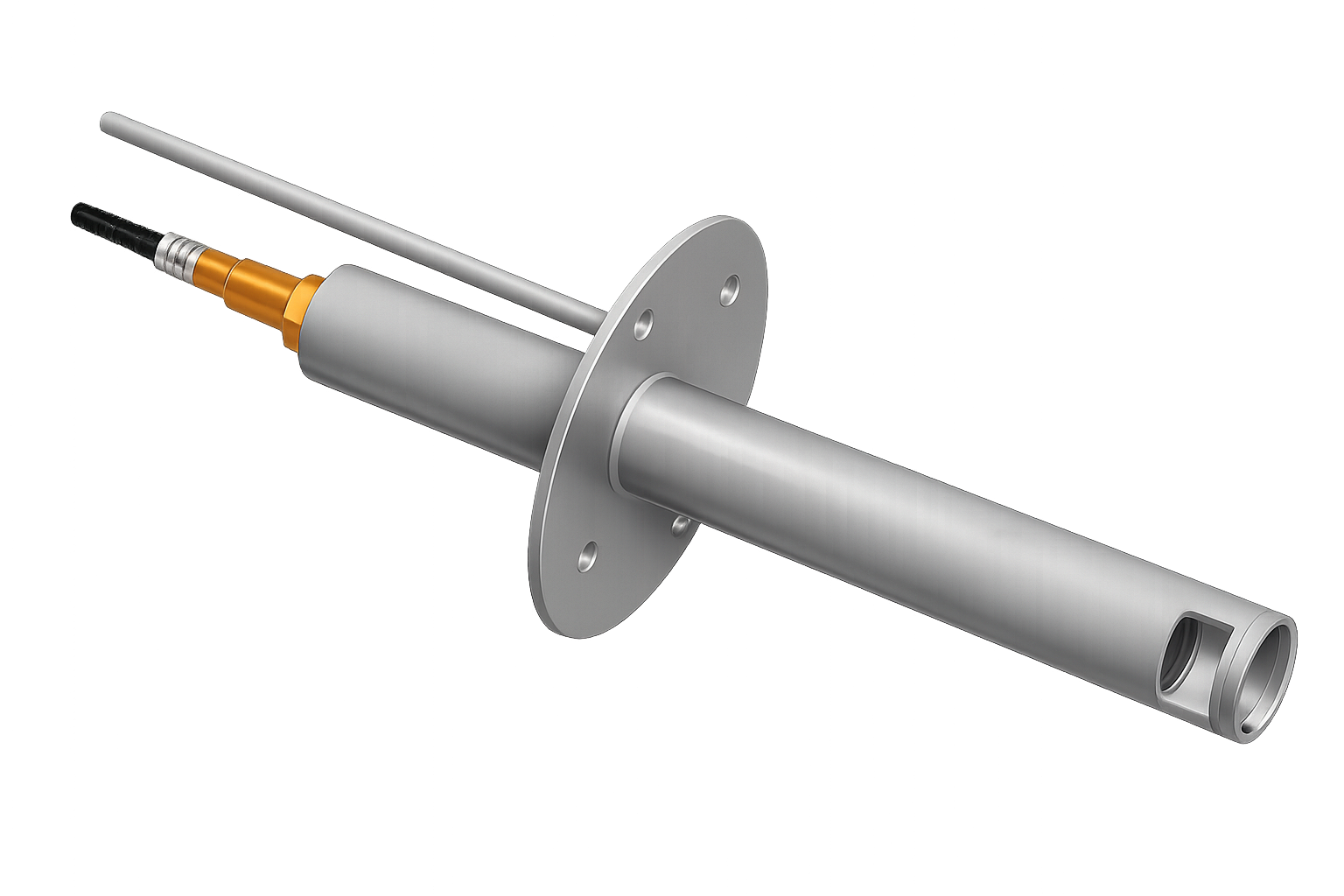
Key highlights
- Guide tube protection for oxygen probe installations in harsh flue gas conditions
- Helps direct flue gas through the sensor while reducing contamination exposure
- Available for demanding retrofit and protection-focused installations
- Supports longer probe service life and more stable operation over time
Next step
GT.104.130 is a guide tube protection assembly for oxygen probe installations in harsh flue gas environments. It helps direct flue gas through the sensing area while protecting the sensor from dust and combustion-related contamination, making it a practical support component for longer probe life and more stable long-term operation.
Works with
Often specified together in retrofit, monitoring and service projects.
OS2024 Oxygen Sensor
OS2024 is Scan-Tronic's next-generation oxygen sensor platform for industrial combustion measurement, retrofit upgrades and digital monitoring architectures. As the modern successor to OS2014, it is compatible with OC2016 systems, required for OC2026 and suited as the oxygen sensing foundation for broader monitoring and diagnostics systems in the Scan-Tronic portfolio.
NS2025 NOx & Oxygen Sensor
NS2025 is Scan-Tronic's advanced NOx and oxygen sensor platform for combustion systems that need more than oxygen-only feedback. As the modern successor to the earlier NS2015 generation, it supports advanced monitoring, diagnostics and emissions-focused optimisation strategies where richer emissions information is required.
Industries using this solution
Industries where this product is commonly used.
Waste-to-energy
Robust oxygen, combustion and emissions monitoring for waste-to-energy plants that operate under harsh flue gas conditions, variable fuel quality and strict compliance and maintenance demands.
Pulp and paper
Combustion optimisation and oxygen monitoring for pulp and paper mills, recovery boilers and process energy systems that need stable operation, safety margins and long-term reliability under continuous production pressure.
Refineries and petrochemical
Advanced oxygen monitoring, NOx-ready sensing and combustion diagnostics for refinery fired heaters, petrochemical process heaters and other high-consequence industrial combustion systems.
Steel and metals
High-temperature oxygen monitoring and combustion diagnostics for steel, furnace and metallurgical processes that operate in harsh thermal, dusty and contamination-heavy environments.
GT.104.130 Guide Tube Assembly
Installation and service manual for the GT.104.130 Guide Tube Assembly.
Frequently asked questions
What is GT.104.130 used for?
GT.104.130 is used to support and protect oxygen-probe installations in harsh combustion environments, especially where dust, ash or contamination would otherwise reduce measurement stability or sensor life.
When is a guide tube assembly recommended?
It is recommended when the flue-gas environment is dusty, contaminated or physically demanding enough that the sensor benefits from guided flow, better installation geometry and extra protection.
Can GT.104.130 help extend sensor life?
Yes. Its purpose is to reduce direct contamination exposure and improve operating conditions around the sensor, supporting longer service life and more stable long-term measurement.
Which Scan-Tronic sensor systems commonly use GT.104.130?
GT.104.130 is commonly selected for oxygen-sensing installations such as OS2024, and it can also be relevant in other protected sensor arrangements depending on the process environment.
How is the correct guide tube configuration specified?
The correct configuration is selected based on boiler geometry, flue-gas conditions, installation position and contamination risk. Scan-Tronic defines the appropriate setup during technical dialogue and project specification.