Product
Lifecycle Support Ecosystem
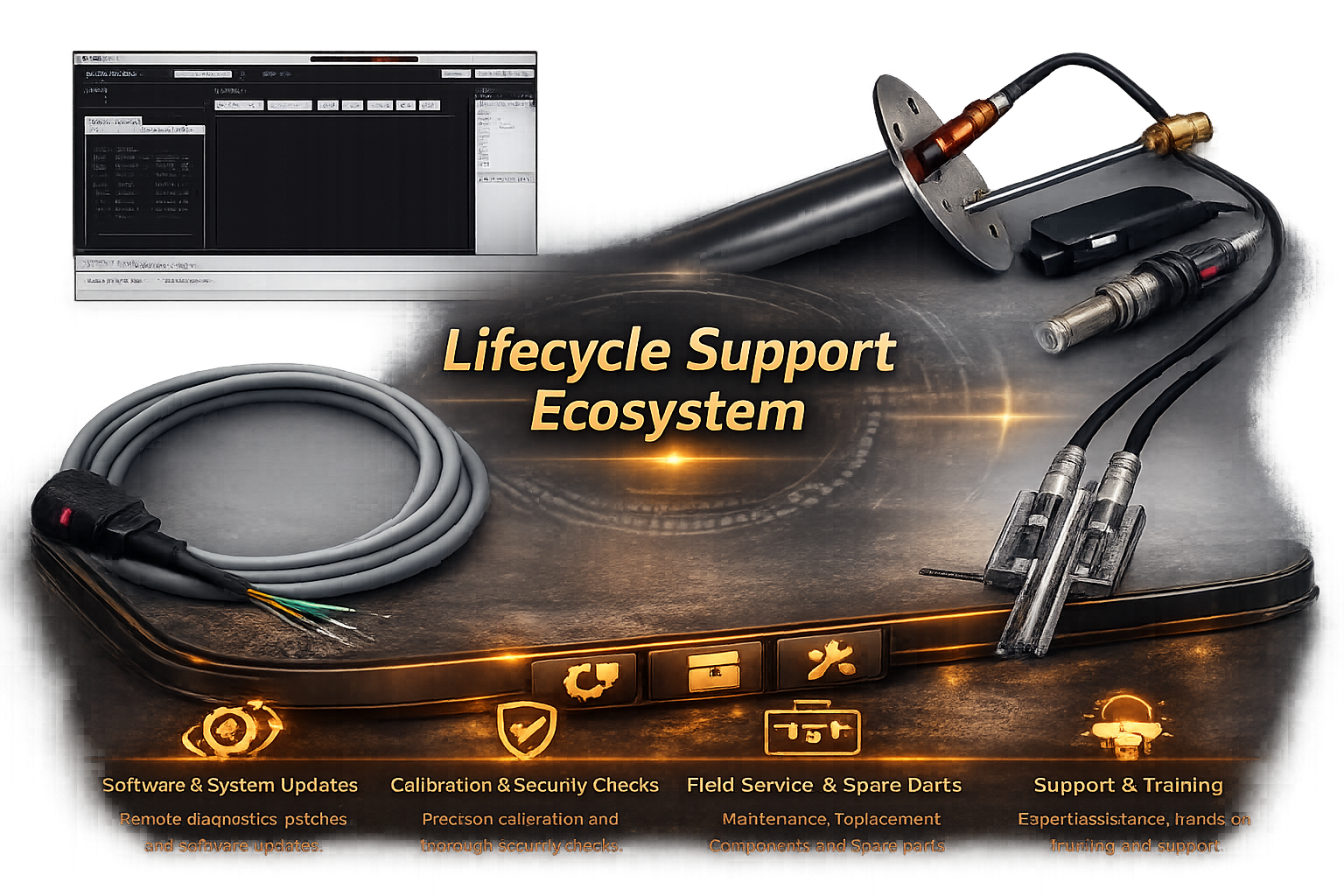
Scan-Tronic's Lifecycle Support Ecosystem gives plants a practical way to protect long-term combustion reliability through modern oxygen and NOx sensor platforms, verification tools, guide tube protection and retrofit-ready support components. It is designed for installed systems that must remain measurable, serviceable and upgrade-ready over time, whether the need is sensor replacement, harsher process protection, planned verification or expansion into newer control and diagnostics systems.
Key highlights
- Modern sensor platforms for oxygen-only and NOx + O2 strategies
- Verification and service tools supporting long-term maintenance readiness
- Guide tube protection for harsh flue gas environments and retrofit projects
- Lifecycle support covering replacement, upgrade and long-term operation
- Built to keep combustion-critical measurement systems reliable over time
Next step
Scan-Tronic's Lifecycle Support Ecosystem gives plants a practical way to protect long-term combustion reliability through modern oxygen and NOx sensor platforms, verification tools, guide tube protection and retrofit-ready support components. It is designed for installed systems that must remain measurable, serviceable and upgrade-ready over time, whether the need is sensor replacement, harsher process protection, planned verification or expansion into newer control and diagnostics systems.
Key benefits
Lifecycle Support Ecosystem from Scan-Tronic combines oxygen and NOx sensor platforms, verification tools and guide tube protection for retrofit projects, long-term serviceability and combustion measurement reliability.
Modern sensor upgrade planning
The lifecycle portfolio gives plants a structured path from earlier Scan-Tronic sensor generations to newer oxygen and NOx platforms. Instead of turning every service case into a redesign exercise, operators can modernise step by step while keeping control of cost, compatibility and installation risk.
Longer sensor service life
Lifecycle support is not limited to supplying replacement parts. It is about protecting measurement quality over time through the right sensor choice, the right installation method and the right mechanical protection in dirty or thermally demanding flue-gas environments.
Better maintenance readiness
Verification and calibration tools still matter even when newer products reduce routine manual intervention. They give operators and service teams a controlled maintenance workflow across mixed installed bases where older and newer Scan-Tronic generations may still operate side by side.
Retrofit-friendly support logic
Many plants need to extend the useful life of installed oxygen-control systems before committing to larger digital upgrades. The Lifecycle Support Ecosystem supports that reality with replacement sensors, verification tools and installation accessories that fit practical retrofit work instead of theoretical future projects.
Protection for harsh combustion environments
Combustion measurement hardware often runs in dusty, particulate-heavy or thermally aggressive flue gas. The ecosystem therefore includes protection and installation support that reduces contamination exposure, improves measurement conditions and helps keep service intervals more predictable.
Support for oxygen and NOx strategies
The portfolio spans both classic oxygen-focused control systems and more advanced NOx-plus-oxygen measurement strategies. That means the support logic can serve straightforward oxygen-control installations as well as plants moving toward emissions-oriented monitoring, diagnostics and broader combustion analysis.
Works with
Often specified together in retrofit, monitoring and service projects.
OS2024 Oxygen Sensor
OS2024 is Scan-Tronic's next-generation oxygen sensor platform for industrial combustion measurement, retrofit upgrades and digital monitoring architectures. As the modern successor to OS2014, it is compatible with OC2016 systems, required for OC2026 and suited as the oxygen sensing foundation for broader monitoring and diagnostics systems in the Scan-Tronic portfolio.
NS2025 NOx & Oxygen Sensor
NS2025 is Scan-Tronic's advanced NOx and oxygen sensor platform for combustion systems that need more than oxygen-only feedback. As the modern successor to the earlier NS2015 generation, it supports advanced monitoring, diagnostics and emissions-focused optimisation strategies where richer emissions information is required.
CAL2 Verification & Calibration Kit
CAL2 is a verification and calibration kit for Scan-Tronic oxygen measurement systems, supporting planned service routines, supervisory checks and long-term measurement confidence in industrial boiler environments. It remains a relevant lifecycle tool both for traditional calibration-based workflows and for verification cases where newer platforms reduce routine manual intervention.
GT.104.130 Guide Tube Assembly
GT.104.130 is a guide tube protection assembly for oxygen probe installations in harsh flue gas environments. It helps direct flue gas through the sensing area while protecting the sensor from dust and combustion-related contamination, making it a practical support component for longer probe life and more stable long-term operation.
Industries using this solution
Industries where this product is commonly used.
District heating
Combustion optimisation, oxygen control and boiler monitoring for district heating and CHP plants that need fuel efficiency, stable load response and reliable emissions performance across changing seasonal demand.
Waste-to-energy
Robust oxygen, combustion and emissions monitoring for waste-to-energy plants that operate under harsh flue gas conditions, variable fuel quality and strict compliance and maintenance demands.
Industrial boilers
Oxygen control, combustion monitoring and retrofit optimisation for industrial steam boilers, process heat systems, kilns and thermal oil boiler applications where uptime and tuning quality matter.
Pulp and paper
Combustion optimisation and oxygen monitoring for pulp and paper mills, recovery boilers and process energy systems that need stable operation, safety margins and long-term reliability under continuous production pressure.
Refineries and petrochemical
Advanced oxygen monitoring, NOx-ready sensing and combustion diagnostics for refinery fired heaters, petrochemical process heaters and other high-consequence industrial combustion systems.
Food and beverage process heat
Oxygen control and combustion optimisation for food and beverage steam boilers, breweries and process heat systems that need clean, stable and energy-efficient operation without unnecessary complexity.
Steel and metals
High-temperature oxygen monitoring and combustion diagnostics for steel, furnace and metallurgical processes that operate in harsh thermal, dusty and contamination-heavy environments.
Boiler manufacturers and OEMs
OEM-ready oxygen control packages, sensors and monitoring platforms for boiler manufacturers that need dependable integration, lifecycle continuity and export-ready combustion solutions.
Frequently asked questions
What is included in the Lifecycle Support Ecosystem?
The Lifecycle Support Ecosystem includes modern oxygen and NOx sensor platforms, verification tools and guide tube protection components that support long-term maintenance, retrofit work and system reliability.
Is this only relevant for older installations?
No. It supports both existing and newer installations. Some plants use it to maintain legacy oxygen-control systems, while others use it alongside newer platforms such as OC2026 or advanced monitoring and diagnostics systems.
When should a plant choose OS2024 instead of an older oxygen sensor generation?
OS2024 is the modern oxygen sensor platform in the current Scan-Tronic architecture. It is the required sensor generation for OC2026 and also supports practical upgrades from earlier oxygen-sensing generations.
When is NS2025 the better choice?
NS2025 is the better fit when a plant needs a more advanced sensing layer with NOx and oxygen data for monitoring, diagnostics or emissions-related work.
Is CAL2 still relevant if OC2026 uses auto-calibration logic?
Yes, but not as a routine requirement. OC2026 normally does not depend on manual calibration in everyday operation, yet CAL2 can still be relevant for verification, service confirmation or site-specific maintenance procedures.
When should GT.104.130 be added to a sensor installation?
GT.104.130 is typically added when the flue-gas environment is dusty, contaminated or otherwise harsh enough that the sensor needs better protection and more stable installation conditions.
Do these products support both retrofit work and new projects?
Yes. The Lifecycle Support Ecosystem supports both retrofit work and new projects, especially where long-term operability, service support and practical upgrade planning matter.